

Cellphone vs. DSLR: What’s Best for Your Real Estate Photos?
In today’s visually-driven real estate market, high-quality photographs are non-negotiable. They’re often the first impression a potential buyer gets of a property, and they can make or break whether someone schedules a showing. But with advancements in smartphone camera technology, many property owners and even some agents find themselves asking: do I really need a DSLR, or can my cellphone do the trick?
Let’s break down the pros and cons of using a cellphone versus a DSLR camera for real estate photography.
The Rise of the Smartphone: Convenience and Accessibility
Modern smartphones boast impressive camera capabilities. For many, they’ve become the go-to device for capturing everyday moments, and their ease of use makes them tempting for real estate.
Cellphone Pros:
- Convenience: Your phone is always with you! It’s quick to pull out, snap a few photos, and even edit them on the go.
- Accessibility: Most people already own a smartphone, eliminating the need for additional equipment investment.
- User-Friendly Interfaces: Smartphone camera apps are designed to be intuitive, often with automatic settings that produce decent results with minimal effort.
- Instant Sharing: Photos can be immediately uploaded to social media, listing sites, or shared with clients directly from your device.
Cellphone Cons:
- Limited Sensor Size: Smaller sensors generally mean less light-gathering capability, leading to noisier images in low-light conditions.
- Fixed Lenses (Mostly): While some phones have multiple lenses, you lack the flexibility of interchangeable lenses crucial for real estate (think wide-angle for small rooms).
- Dynamic Range Issues: Balancing bright windows with dark interiors can be a challenge, often resulting in blown-out highlights or underexposed shadows.
- Lack of Manual Control: While some apps offer manual settings, they often don’t provide the control of a DSLR, which is vital for professional-looking shots.
- Distortion: Wide-angle phone lenses can sometimes introduce barrel distortion, making straight lines appear curved and rooms look unnatural.
The Professional Standard: DSLR Cameras
For years, DSLR (Digital Single-Lens Reflex) cameras have been the industry standard for professional photographers, and for good reason. They offer a level of control and image quality that smartphones simply can’t match.
DSLR Pros:
- Superior Image Quality: Larger sensors capture more light, resulting in sharper images with less noise, even in challenging lighting.
- Interchangeable Lenses: This is a game-changer for real estate. Wide-angle lenses are essential for showcasing rooms, while prime lenses can create stunning detail shots.
- Full Manual Control: DSLRs offer complete control over aperture, shutter speed, and ISO, allowing photographers to perfectly expose every shot.
- Better Dynamic Range: DSLRs handle high-contrast scenes much better, preserving detail in both highlights and shadows.
- RAW File Format: Shooting in RAW provides maximum flexibility for post-processing, allowing for significant adjustments without quality loss.
DSLR Cons:
- Cost: DSLRs and their accompanying lenses represent a significant financial investment.
- Bulk and Weight: They are larger and heavier than smartphones, making them less convenient to carry around.
- Learning Curve: Mastering a DSLR takes time and practice, especially when shooting in manual mode.
- Post-Processing Required: To get the best results, DSLR photos often require editing software and a more involved workflow.
So, Which Should You Choose?
The “best” choice depends on your specific needs, budget, and desired outcome:
- For quick snapshots, personal use, or very low-budget listings: A modern smartphone can certainly get the job done, especially if you have good natural light and take the time to compose your shots carefully.
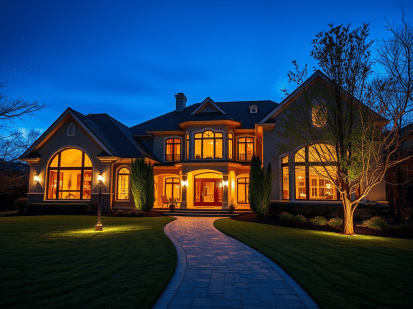
- For professional listings, luxury properties, or when you want to stand out: A DSLR (or a mirrorless equivalent) is the clear winner. The image quality, flexibility, and control it offers will elevate your photography and ultimately, your listing.
Our Recommendation:
If you’re serious about real estate and want to present properties in the best possible light, investing in a DSLR camera and a good wide-angle lens (or hiring a professional real estate photographer) is highly recommended. The impact of stunning visuals on a listing’s performance is undeniable.
Ultimately, the goal is to showcase the property in an appealing and accurate way. While your smartphone is an incredible tool, for truly impactful real estate photography, the professional capabilities of a DSLR still reign supreme.








 Carrigan Real estate Photography