
Recent Blogs
Posts
2025/2026
- How to Find the Main Idea: A Guide for Better Reading
- How to Succeed at UTC: Essential Writing Skills for University
- The Problem-Solution Essay
- Simple Past & Present Perfect
- Upgrade Your English Writing: How to Use Pronouns for Better Flow
- The Summary / Response Essay: A Step-by-Step Guide
- Understanding the American Dream: More Than Wealth
- Why APA Style is Essential in American Academia
- Understanding APA: Citing Two, Three, and Secondary Sources
- How to Find Reliable Sources for Your Next Research Paper
- Understanding Should vs. Must in Advice and Rules
- A or An? How to Choose the Right Word Every Time
- have gone vs. have been [are they the same?]
- Inferences [reading between the lines]
- Useful Transitions for Expressing Cause and Effect
- Essential Guide to Writing College Papers
- Don’t Just Drop It: How to Seamlessly Integrate Quotes in Your Essays
- Finding Your Rhythm: The Secret to a Consistent Writing Voice
- Why Knowing Your Audience Changes Everything
- The Weakest Link: How to Spot and Fix Comma Splices
- The Rule You Can’t Ignore: Subject-Verb Agreement
- Beyond Google: The Ultimate Guide to Finding Credible Essay Sources
- How to Develop Good Content
- What is Cohesion?
- The Secret to Better Writing: Paragraph Unity
- Fragments, Run ons, and Comma Splices
- Navigating Your Research Paper: The Power of a Good Research Question
- Revise Your College Essay in 4 Simple Steps
- How to Understand New Words Without a Dictionary
- The Mix-Up: Understanding “It’s” and “Its”
- Stop Failing Timed Essays! Try the 10-70-20 Rule
- Using Commas
- When and How to Use Passive Voice in Essays
- Why Paraphrasing Enhances Your Writing
- Everyday English vs. Academic English: What is the Difference?
- WHICH ADJECTIVE COMES FIRST?
- Understanding Make, Have, Get: Key English Verbs
- Effective Strategies to Overcome Writer’s Block
- Memorial Day vs Veterans Day: Key Differences
- How to Request Vacation Days: A Step-by-Step Guide
-
This guide emphasizes the importance of identifying main ideas and supporting details for effective reading. It clarifies the difference between a topic and a main idea, illustrating that the main idea is a specific point about the topic. Through relatable examples, it demonstrates how main ideas connect with supporting details.
-

Starting your studies at the University of Tennessee at Chattanooga (UTC) is an exciting journey! However, you will quickly notice that university-level writing is quite different from the writing you did in high school. To get good grades, you need more than just correct grammar. Whether you are an undergraduate or a master’s student, here…
-

A Problem-Solution Essay outlines an issue and proposes solutions to persuade readers. It can be organized using either the Block Method, detailing the problem first followed by solutions, or the Point-by-Point Method, addressing each problem with its corresponding solution. The essay includes an introduction, body paragraphs, and a conclusion emphasizing the thesis and a call…
-

This content explains the differences between the simple past and present perfect tenses in English. The simple past is used for completed actions within specific time frames, while the present perfect describes past actions relevant to the present. Additionally, it highlights the present perfect progressive for ongoing actions. Examples illustrate their usage.
-
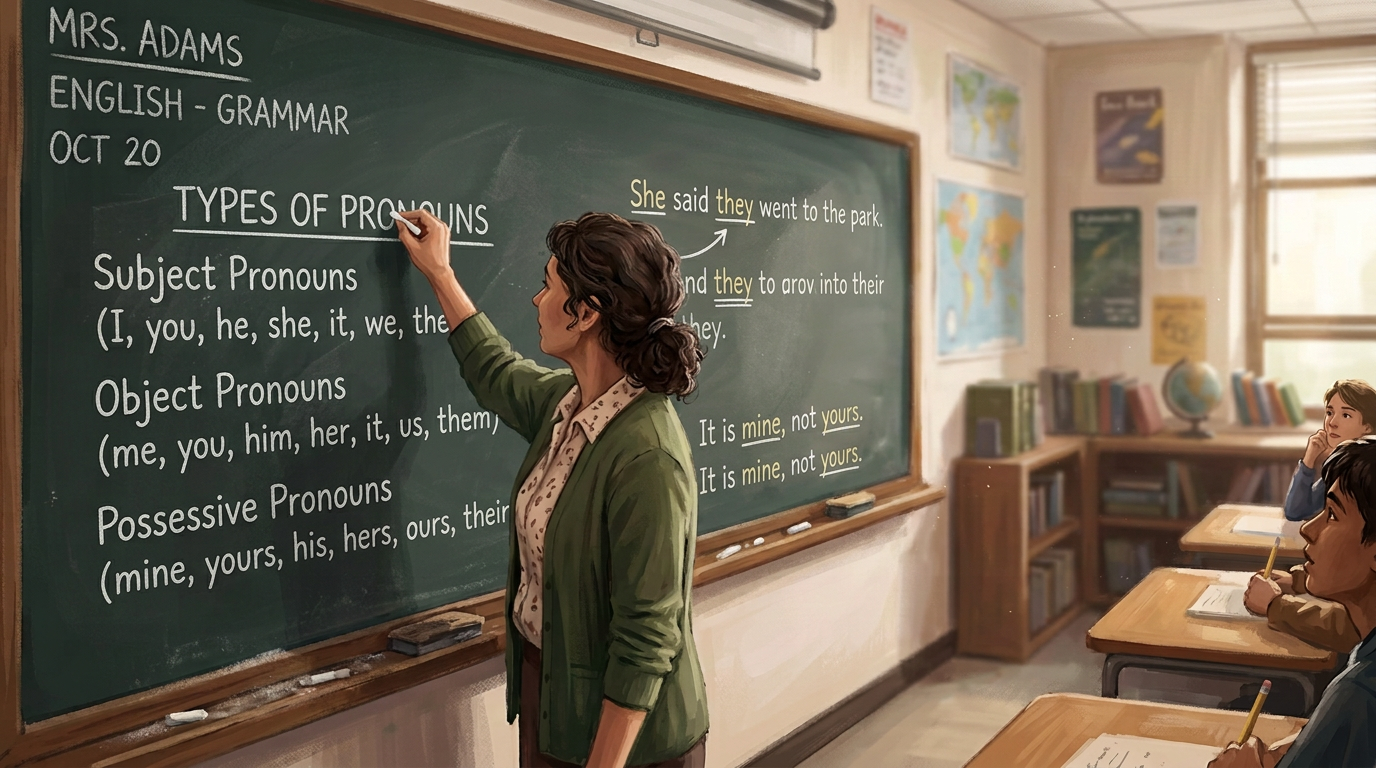
Using pronouns effectively can enhance the flow of your writing by reducing repetitiveness. Instead of repeatedly using nouns, pronouns like he, she, it, and they create coherence and maintain reader engagement. This technique helps streamline communication in various writing formats, making content more fluid and enjoyable.
-

The content provides a guide to writing a Summary/Response paper, detailing how to effectively summarize an author’s main points while excluding personal opinion. It emphasizes organizing both the summary and the response clearly, using examples like an article on homelessness to illustrate proper structure and support for personal evaluations.
-

The American Dream transcends material wealth, embodying ideals of equal opportunity, personal freedom, and a better future for generations. It emphasizes that success is achievable through effort, regardless of one’s background. The concept has evolved, allowing individuals to define success in various forms, from traditional jobs to modern entrepreneurial endeavors.
-

Adapting to the American higher education system requires understanding APA style for academic writing. This format protects academic integrity, builds credibility through proper sourcing, ensures clarity, and allows for consistent presentation. Mastering APA not only helps avoid plagiarism but also enhances the quality and authority of scholarly work.
-

Understanding APA citation is crucial for academic success. This guide addresses common questions on citing two authors, three or more authors, and secondary sources. Key points include naming both authors for two-author citations, using “et al.” for three or more, and proper acknowledgment for secondary sources. Mastering these rules enhances writing quality.
-

Writing a research paper can be daunting, but a focused approach simplifies the process. Start with a clear research question, use both primary and secondary sources, and thoroughly investigate information. Evaluate online sources for reliability, checking the author’s qualifications and potential bias. Practice these principles to enhance your research success.
-

The article explains the differences between the modal verbs “should” and “must.” “Should” is used for advice and suggestions, indicating a good idea or mild warning, while “must” conveys necessity or strict rules, signifying obligations and prohibitions. Understanding these distinctions helps clarify when to apply each verb in communication.
-

Rule: Use “a” before words that begin with a CONSONANT SOUND and “an” before words that begin with a VOWEL SOUND. But there are exceptions.
-
![have gone vs. have been [are they the same?]](https://rcarrigan.com/wp-content/uploads/2026/07/richard-carrigan-english-language-coaching-6a5e60dccd141.png)
The difference between “have gone” and “have been” is significant in English. “Have gone” indicates a person is still at the destination, while “have been” signifies they have returned from their trip. For example, “She has gone on a business trip” means she hasn’t returned, while “He has been to New York” means he has…
-
![Inferences [reading between the lines]](https://rcarrigan.com/wp-content/uploads/2026/07/carrigan-english-language-coaching-6a504fb8a68d2.png)
The content explains how readers can draw conclusions and make inferences beyond the literal text. It provides examples illustrating the difference between inferred conclusions and stated facts. Readers must analyze supporting details to uncover the implied main idea, emphasizing the importance of interpreting nuanced meanings in writing.
-

The content explains how to express causes and effects in writing. To express a cause, use “because of” or “as a result of” followed by a noun phrase. For expressing effects, use “therefore,” “consequently,” or “as a result,” connecting two complete sentences. It offers guidelines and examples for clarity.
-

Starting university presents exciting opportunities and challenges, especially in mastering academic writing. The recommended book, “Student’s Guide to Writing College Papers” by Kate Turabian, offers invaluable step-by-step guidance for writing research essays, improving research skills, and serving as a reference tool. This essential guide aids students in achieving better grades.
-

The passage explains the importance of avoiding drop quotes in academic writing, which can confuse readers by abruptly presenting quotes without context. It suggests using the “Quote Sandwich” method, which includes an introduction, the quote, and an explanation of its relevance. This technique enhances clarity and coherence in essays.
-

Maintaining a consistent writing voice is crucial for effective communication. A writer’s voice, shaped by vocabulary and sentence structure, should remain steady throughout a piece to build trust with readers. Strategies like establishing a clear persona, monitoring vocabulary and tone, and matching sentence structure can help achieve this consistency.
-

Effective essay writing goes beyond mere knowledge display; it involves understanding and tailoring your content to your audience. Audience awareness shapes your tone, vocabulary, and evidence selection, impacting persuasion. By anticipating readers’ biases and expectations, and addressing counterarguments, you enhance your writing’s credibility and engage your audience in meaningful dialogue.
-

The text explains comma splices, which occur when two complete sentences are joined by only a comma. It emphasizes the importance of correct punctuation and offers three solutions: using a period to separate sentences, adding a conjunction, or replacing the comma with a semicolon. Proofreading for comma usage is encouraged.
-

Subject-verb agreement is crucial for clear English communication. This rule states that singular subjects take singular verbs, while plural subjects take plural verbs. It’s essential to watch for common traps, like intervening words, singular terms that sound plural, and subjects connected by “and,” which require plural verbs. Ensure your writing matches accordingly.
-

To write a successful B2 level essay, it is crucial to use credible sources to support your thesis. Relying on unreliable websites weakens your arguments. Utilize specialized databases like Google Scholar and JSTOR for quality materials. Evaluate sources through authority, currency, objectivity, and coverage to enhance your writing.
-

Have you ever stared at a blank piece of paper or a computer screen, wondering what to write? You know your topic, but you just don’t know how to make your writing interesting or deep. In our last posts, we talked about paragraph unity and cohesion. Those tools help you organize your writing. But today,…
-

Cohesion is essential for smooth writing, connecting sentences like glue. It involves using transition words, pronouns, and synonyms to ensure ideas flow logically. A cohesive text allows readers to follow thoughts effortlessly, avoiding choppy or disconnected narratives. Writers can enhance cohesion with simple techniques to create a more pleasant reading experience.
-

Paragraph unity ensures all sentences in a paragraph revolve around a single main idea. A unified paragraph consists of a topic sentence, supporting sentences that elaborate on the topic, and a concluding sentence. Staying focused prevents confusion and enhances clarity, making writing easier to understand and more effective.
-

The content discusses common sentence errors in English, focusing on sentence fragments, run-on sentences, and comma splices. It defines each error and provides examples, emphasizing the importance of including a subject, verb, and complete idea in sentences. The text also demonstrates corrections for these mistakes to enhance clarity in writing.
-

A strong research question is essential in academic writing, serving as a guiding tool similar to a map for a road trip. It narrows the scope of research, ensuring focus and organized analysis. To formulate an effective question, examine existing literature, identify gaps, and evaluate it using a three-part framework for clarity and importance.
-

Revising an essay is essential for improving clarity and effectiveness. Start by evaluating overall structure and thesis strength, then refine content for focus and support. Pay attention to grammar and spelling, avoiding reliance on spellcheck. Lastly, seek feedback to gain new perspectives. Thorough revision leads to a polished final paper.
-

When encountering unfamiliar words while reading, students often stop to check a dictionary, which can hinder learning. Instead, they can use context clues, such as synonyms, antonyms, examples, definitions, and inferences, to deduce meanings. This approach enhances reading fluency and comprehension. Keep guessing and improve your reading skills!
-

The confusion between “it’s” and “its” is common among English speakers. “It’s” is a contraction for “it is” or “it has,” while “its” indicates possession. To determine the correct usage, replace the word with “it is”; if the sentence makes sense, use “it’s.” Otherwise, use “its.”
-

Timed essay exams can be daunting for students, especially in the U.S. Many tend to write immediately without planning, leading to disorganized essays. The 10-70-20 Rule suggests spending 5 minutes planning, 35 minutes writing, and 10 minutes reviewing to improve clarity and quality, helping students manage their time effectively.
-

This post provides essential tips for using commas effectively. It outlines three key rules: place a comma before connecting words in compound sentences, use a comma after starting words in complex sentences, and avoid using commas when the starting word is positioned in the middle of the sentence.
You must be logged in to post a comment.